
Meningitis: What Every Patient Should Know
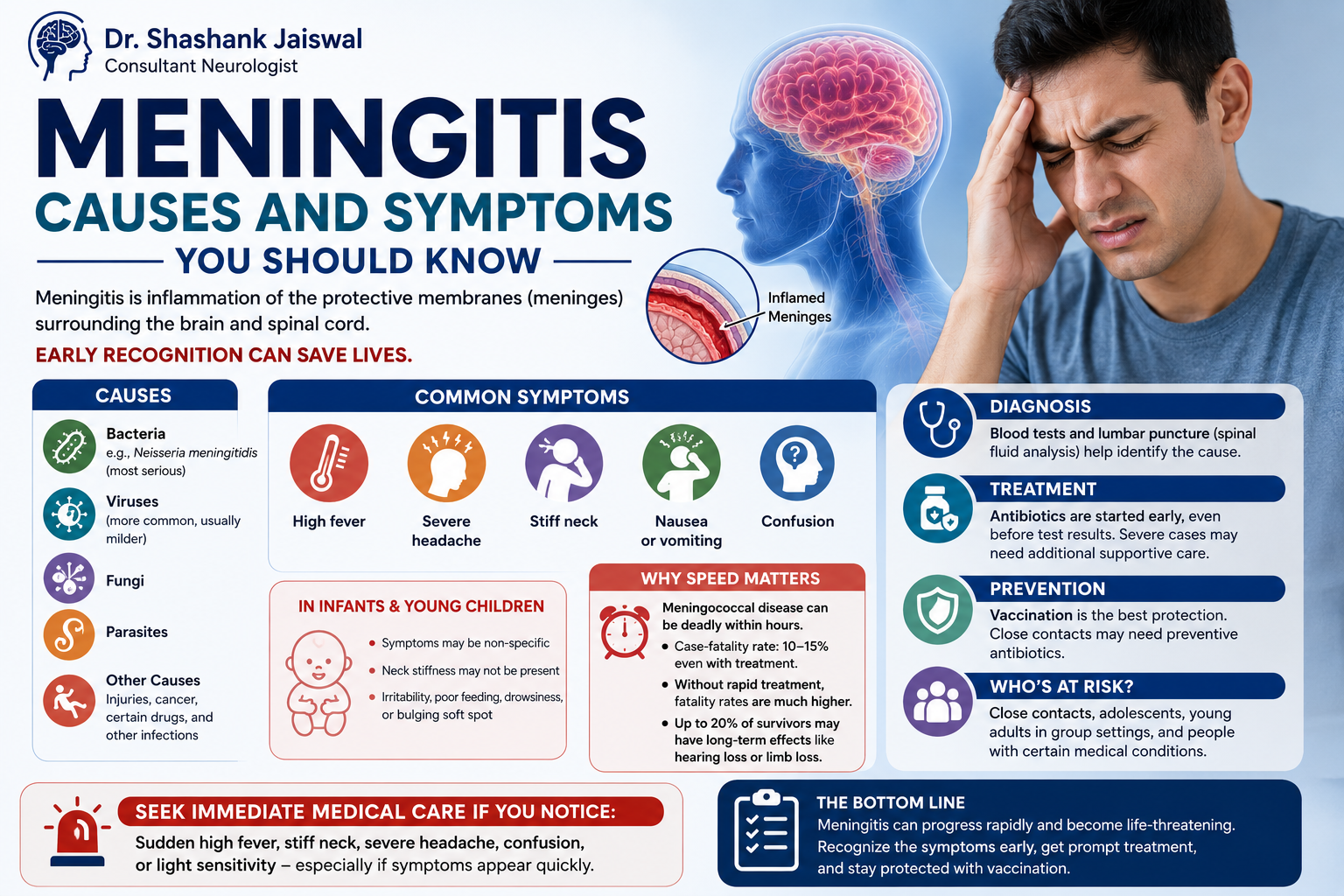
Meningitis causes and symptoms: Meningitis is a condition in which the protective membranes covering the brain and spinal cord, known as the meninges, become inflamed. It usually develops when an infection spreads to the fluid surrounding these structures, though injuries, certain cancers, and some medications can also trigger it. Usually caused by a bacterial or viral infection of the fluid surrounding them; injuries, cancer, certain drugs, and other infections can also cause it.
Meningitis Causes and Symptoms
Multiple organisms can be responsible. Bacteria, viruses, parasites, and fungi can all cause meningitis, though viral meningitis tends to be milder while bacterial forms are far more dangerous. One major bacterial culprit is Neisseria meningitidis. Meningococcal disease refers to any infection caused by these bacteria, and the two most common types are meningitis, in which bacteria infect the lining of the brain and spinal cord, and bloodstream infections, in which bacteria enter the bloodstream and damage blood vessel walls. Interestingly, many people carry these bacteria without ever getting sick. N. meningitidis lives in the back of the nose and throat, and about 1 in 10 people carry it there without becoming ill; occasionally the bacteria spread elsewhere in the body and cause disease.
Why Speed Matters
Bacterial meningitis is a race against time. Meningococcal disease is serious and can turn deadly within hours, which is why early diagnosis and antibiotic treatment matter so much. Even with treatment, outcomes can be severe: the disease progresses rapidly and carries a case-fatality rate of 10 to 15 percent even with antimicrobial treatment, and without rapid treatment, fatality rates climb much higher. Survivors aren’t always spared long-term consequences either — up to 20 percent of survivors experience lasting effects such as hearing loss or limb amputation caused by tissue damage.
Meningitis Symptoms
The classic symptom picture includes fever, confusion, a stiff neck, heightened sensitivity to light, headache, and nausea or vomiting. However, presentation isn’t always textbook. In infants and children under two years old, symptoms can be non-specific, and the neck stiffness typically associated with meningitis may not even be present. Some patients don’t develop meningitis-type symptoms at all. People with meningococcal bloodstream infection or septic arthritis may present without any of the typical meningitis symptoms.
Patient tip: If you or a family member develops a sudden high fever with a stiff neck, severe headache, or confusion — especially with light sensitivity — treat it as an emergency and seek care immediately. Waiting to “see if it improves” can be dangerous with bacterial meningitis.
How It’s Diagnosed
Doctors move quickly once meningitis is suspected. If bacterial meningitis is suspected, clinicians collect blood for culture right away and perform a lumbar puncture to obtain cerebrospinal fluid for microscopic examination and Gram stain. A definitive diagnosis is typically made by isolating the bacteria from a normally sterile body site, such as blood or spinal fluid, through culture or genetic testing.
Treatment Approach
Because timing is critical, doctors often start treatment before all test results are back. Empiric antimicrobial treatment begins early, before diagnostic results are available, and if a lumbar puncture must be delayed for any reason, antibiotics are given immediately after blood cultures are drawn. The standard first-line drugs are extended-spectrum cephalosporins such as cefotaxime or ceftriaxone, with penicillin or ampicillin reserved for cases where susceptibility testing confirms they’ll work. Depending on severity, additional supportive treatments may be needed alongside antibiotics.
Who’s at Risk — and a Growing Concern
While anyone can develop meningococcal disease, certain groups face higher risk, including close or lengthy contacts of an infected person. Notably, public health data show a worrying trend: cases of meningococcal disease in the United States have increased sharply since 2021 and now exceed pre-pandemic levels. Adding to the challenge, antibiotic-resistant strains of serogroup Y have been detected in the U.S. since 2019, prompting updated guidance on treatment and monitoring.
Prevention
Vaccination remains the strongest defense against meningococcal meningitis. Meningococcal disease can be deadly, but vaccines help prevent it, and staying current with recommended immunizations is especially important for adolescents, young adults in group living settings, and people with certain medical conditions. Close contacts of a confirmed case should also receive preventive antibiotics promptly, since the infection can spread through prolonged close contact.
The Bottom Line
Meningitis can progress from mild-seeming symptoms to a life-threatening emergency within hours. Recognizing meningitis causes and symptoms early, seeking immediate medical attention, and staying up-to-date on vaccinations are the most powerful tools patients have against this disease.